Today begins a seven part series concentrating on the 7 life lessons from RUMI and how I am applying them to my life.
For those of you who don’t know, RUMI was a Persian poet, Islamic scholar and Sufi Mystic. Born in Afganistan on September 30, 1207 and died in Turkiye December 17, 1273. Rumi was on of the great spiritual masters and poetic geniuses of mankind. His works discuss the concept of God and the definition of love. According to Rumi’s philosophy, life should be a journey to union with the one true God.
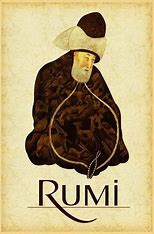
Rumi’s most famous poems include “On the turn”, “When I die”, and “The gifts of the beloved”. According to the New Yorker article “The erasure of Islam from the Poetry of Rumi” Jan. 5 2017 by Rozina Ali, “Rumi is the best selling poet in the United States. Although a lifelong scholar of Islam Rumi was less frequently described as a Muslim. Whether it is a newer rendition on Rumi’s poetry or an exact translation by a Muslim cleric, Rumi understood there is a space between right-doing (religion) and wrong-doing (infidelity) where he meets us”. A space of compassion and love that Rumi put forward more than seven hundred years ago that is still a teachable moment for us today.
Rumi saw us all as one and his doctrine of peace and love advocates tolerance, reasoning, and charity with the same eye as Muslims, Jews, Christians and others. Love is what keeps us alive.
“Your task is not to seek for love,
but merely to seek and find all the barriers within yourself
that you have built against it”
Rumi
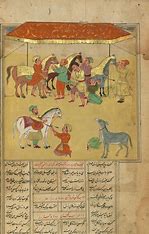
Self empowerment and spiritual development are timeless. Our ascension lies in moving beyond the boundaries of a mere human to much higher aspirations of who we want to become. Rumi’s 7 life lessons are a pathway. It is only with each step we take, that our lives will unveil our potential.
Join me each Sunday as I present each lesson and share how I am following this path to open my heart so I can receive more love and compassion this year.
It’s time to shine your light Tribe,
Jacqueline
 TEETERING ON THE EDGE